


Lucy recommends: Inkblood
🔍 fear the ink blood

Hey folks, happy Thursday.
This week's LFG pick is coming at you a day early because this game has been on my list to be an LFG pick from the second I saw it, and as of right now, the demo is finally out!
If you're a detective game sicko and are looking for glorious and gruesome cases to dig into, this Inkblood is that game and then some. For this issue, I spoke with developer Hey Bird!, and the team provided some wonderful insights into how the game was built, its inspirations, and crucially, the coachman's butt crack.
Before we dig in, if you're going to NYCC, I hope to NYCCya there! Sorry. I'll be hosting the Final Fantasy VII Revelation panel on Thursday October 8 at 11 AM ET. If you're not in town, don't worry, it'll be live streamed. Hope to catch you there!
🫶 Thanks so much to all you lovely paid LFG Supporters! If you're not a Supporter, here's what you're missing out on:
This week, they got a bonus newsletter with my review of photography puzzler TOEM 2, as well as thoughts on The Great British Bake Off, Beck's recent show at The Masonic here in San Francisco, and my ongoing journey with Fire Emblem. They also get access to the LFG Discord where I run plenty of giveaways. This week, I'm giving away ten copies of Silver Pines, the very first LFG pick of the week! If that sounds up your street, hit the button below:
What is Inkblood?
Inkblood is an occult detective game.
You're Inquisitor #0134, sent by your superiors on the trail of your predecessor who vanished while hunting down a murderous cult. Solve the cases before everything well and truly goes to hell, if it hasn't already.
What's the gameplay loop?
🔍 Scope the area. From the safety of your carriage, look around the scene of the crime for any clues. You aren't permitted to leave it, after all
⏳ Turn back time. As an Inquisitor, you have access to certain tools including a magnifying glass that shows a snapshot of the past. Use these glimpses of previous events to put your timeline together
📍Check the map. Some clues will lead you to strange locations, which your coachman will be happy to drive you to
📸 Document the evidence. Take photos of the culprits and the evidence to build your case file
📞 Submit your findings to the overseer by telephone
Who's making it?
Founded by two Petrs in 2016 under the original name Twin Petes, Hey Bird! released its first game, Ministry of Broadcast, in 2020. Work on Inkblood began in 2024, and the team size is currently eleven.
Why Inkblood rules
I mean, just look at it.
Its art direction and use of color is sumptuous, and its characters jut and jerk around its scenes like puppets. There's a sense of humor to the movement and the art direction, with every frame of it looking like a piece of art I'd love to hang on my wall. Unlike the Golden Idol games, where you solve cases by inputting the right words into sentences, Inkblood's Inquisitors also require photographic evidence to prove your case. Poring over its scenes to find the right culprit is a joy given how striking the game looks, and how much love, care, and secrets have been poured into it.
As Inquisitor #00134, your work is done from behind glass. You don't venture out into the crime scenes, heavens no, you sit in your carriage and observe. Not only is the carriage a rapid and convenient mode of transportation, but it's also your command centre: filled with handbooks and manuals, copies of photographs and notes, as well as more... arcane delights. It's your base of operations, and as investigations get more complex, it can get trashed with letters and pictures that don't make sense right now, but they might do later. At times it made me feel like a beleaguered detective stuck on a case that I just couldn't crack. I love the slightly claustrophobic nature of it, and despite all the horrors outside, it feels safe and familiar in here. But the carriage is full of its own secrets that I can't wait to uncover.
One thing I really love about Inkblood is its use of diegetic design: interacting with objects from within the game's world. Rather than have a prominent and out of place UI pop up tell you how something works, instead, a character will deliver you a letter that you could then put on your in-game desk to refer to later. It still performs the same function in telling the player how to do something but in being related to the world it increases immersion both visually and via its storytelling. The diegetic design goes hand in hand with the tactile nature of the game. The bureaucratic Inquisition mostly communicates by letter and by phone. Opening letters, peeling back tape, taking photos, and dialing numbers just feels right, and it's so satisfying to do.
Inkblood gives you the freedom to explore the map by gently tapping the map tattooed on your coachmen's back. So much choice can overwhelm initially, especially given that you can also look into the past, but I quickly found myself falling into a rhythm in my investigations. The game does a great job of signposting you back on track, and its hint system (delivered diegetically via Inquisition superfan Agatha) is robust, offering gentle nudges up to almost full solutions. It all leads to a moment of intense trepidation when calling my overseer to report my findings. After noodling over the puzzles for what feels like ages, Inquisitor #004 then takes a moment (which feels like half an hour) to confirm my solution. I feel like I hold my breath until that confirmation comes in, then I breathe an enormous sigh of relief. For my money, that's the mark of a great puzzle game, and Inkblood has that feeling in spades.
I can't wait to uncover more of Inkblood's secrets when it launches later this year, and I hope you enjoy the demo as much as I did!
For fans of
The Case of the Golden Idol, The Room
Try Inkblood yourself!
Developer Q&A
I had a great chat with Petr Škorňok (producer & co-founder) and Natálie Konečná (art director) from Hey Bird! about the game's origins, their love of carriages, and, diegetic game design (my favorite).
This interview has been lightly edited for length and clarity.

LFG: Where did Inkblood from? What came first, the cult, the Inquisition, the carriage?
Petr: I'm laughing because if you saw the original designs of Inkblood, it didn't look like anything like right now. Originally we wanted to build a more systems-heavy game where you are building a map with text instructions and we wanted to choose a mode of transportation across the map. Dominik (Konečný), the lead designer decided, "Hey, let's try to use a carriage that you travel across the map with."
We actually had a really interesting real-life reference really close to our homes, which was a Carriage Museum. We visited that and saw how many secret stashes there are inside the carriages and how you can play with the actual real-life design of the carriage.
We basically scrapped the whole map-building part. You don't build maps anymore in Inkblood. The vibes of the game were also so different. Originally it was painted and illustrated by Dominik, and it was more like cozy, quirky, wholesome, but we wanted something dark and occult. Occultism felt like a right fit, especially with you, Natálie, I believe like you really like this theme.
Natálie: Yeah, I'm not an occultist, don't worry. I was very interested in all this esoteric stuff, and I really wanted a game that can work with that, but it has to be based in Europe, because there's a lot of tarot cards, et cetera. I felt like we could build something based on our location and history. The Czech Republic is known for alchemists in Prague, and I found it actually super interesting to explore.

LFG: What I love about it is that in terms of the art direction, the game is really dark, but there are these flashes of color that really pop and draw the eye. Can you talk about creating that striking color palette?
Natálie: Colors are one of the things I'm super interested in. I think about them a lot, like how to match—not your typical colors you see outside, but to explore more colors and variations of colors. I really wanted it to be dark, but at the same time I really wanted the player to see some beautiful landscapes.
I really wanted to take the experience when you are going outside and you just explore around your town, or going for a trip or hike, and you just see these beautiful moments. That's what I wanted to put in Inkblood. It is eerie, it is scary, there are murders, but you can still be in a beautiful place. That's the contrast I really wanted to bring, and the colors. I really wanted to use them as a main atmospheric tool to create an emotion and study what the colors are actually doing in the scenes.
LFG: Going back to the carriage, it's really interesting hearing you say that it was one of the things that came first. Can you talk a little bit about its place wen designing this detective mystery? Typically in a game like The Curse of the Golden Idol, you're stuck to one or two scenes, but in Inkblood you've got agency to travel. How much complexity did that add?
Petr: A lot. Because exactly as you just mentioned, in, for example, Golden Idol, you are in one scene, you have really limited space. This comes in multiple layers: even when you are solving the puzzle, you have a vocabulary, you need to find all of the words, and then you just put them into sentences, which is brilliant.
We decided to go in a totally different direction, which was: let's not use words for solving the puzzle, let's use photos. We created this huge problem, which was: okay, there is infinite negative space, and there's an infinite amount of wrong answers. Across this infinite amount of pixels that you can take a picture of, you can also, in some cases, travel between different locations, which multiplies the infinite space.
So the challenge was really trying to lead the player to the answer and still making them feel clever, and there's a really delicate balance because of course we could plant a lot of clues, but then we would just shove it in their face and say, "Hey, this is the answer," and it would be too easy.

Also, we don't use any traditional UI. Everything is diegetic. We really wanted to double down once we decided that the whole game is set in the carriage. This is our main design constraint, let's immerse the player inside the carriage. Let's not use traditional UI, everything is diegetic. You pull down the solution board where you answer the questions, you take pictures with a camera so that it actually feels like you are inside the carriage. The hint system is also diegetic. You don't just get tooltips saying, "Hey, maybe you should look here, or you should look there." We personified the hint system with Agatha, who is the biggest fan of the Inquisition, and she keeps following you along the road. She's observing, she's solving the mysteries, and if you ask her nicely, she will help you.
And the same with the map: you don't get just a traditional map. The map is tattooed on the back of the coachman. We were working with really limited space, which can get cramped really easily. So we were trying to fit a lot of stuff into that space, and maybe that's what also led us to making diegetics. Then you don't get just like a UI popup on top of a UI popup, but everything has its own place and space where you can search for the parts of the puzzle.
LFG: Speaking of the map, where did the idea for the map on the back of the coachman come from?
Natálie: I feel like I came to the project and it was already settled, even though it was an idea and we didn't have any concept art or anything because we didn't have an artist on our team. I don't actually remember how you came up with this. I feel like it was some stupid idea. Somebody said it and you were like, "Yeah."
Petr: Back then I remember it because after three months in the project, it was the first time we publicly playtested the game. It was still about building the map and when we had this semi-public playtest with our friends, we were asking them for feedback. I believe it was one of us or someone from the crowd that said it would be interesting to have this map tattooed on someone.

We had a public vote and most of the people raised their hands that they though this was a cool idea. This is also where the name Inkblood came from. We wanted the map on the back to be tattooed, so it was like a connection between ink and blood. Now it's more about the ink that the letters are written with, and some of them are maybe written with blood, so the name changed its meaning, but the map idea stayed with us during the whole time.
I believe the coachman was the very first character that you actually also designed for the game. And a funny story: we visited the carriage museum, and when you see the window where the coachman is sitting, you see his back and ass.
Natálie So the first concept arts were super funny because it was mostly the bottom part. And I was sitting like, "That is not looking good. I don't want to see somebody's ass the whole game." I don't know when it happened, but I was like, "I can maybe like move him a little bit. Nobody will ever know."
LFG: Poor guy. Where did the mythos surrounding the cult come from? Was it something that was fully formed, or did it come out as the investigations were being written and designed?
Natálie: I feel like we wanted, we really needed, a cult to be part of our game. We were inspired by people who actually want to go back to nature and go against technology. As for the comets, it's more like something I loved as a motif. You can see it for a limited time, it might come back. It's not like the moon, it's something different, but it can have a really similar mythology as the moon. And so for me, it was interesting to have a comet, and the cult was the inspiration for them. It is scarecrow from the field, but that's it.
Petr: I would also add that the first faction we had in the game was the Inquisition, because they felt really bureaucratic, like you are following someone's orders. The original idea was that they're as precise as surgeons, and this is why you receive all of these letters, they don't even talk to you. People are afraid to talk to you, there's glass between you and the other NPCs and other characters in the game. No one talks to you.
There's like the fraction called the shroomfolk people, they're bound more to nature. We wanted to position the game as an occult mystery game, and that there are certain rituals that are happening inside the carriage. So having the cult made sense for us.
In the beginning or in the pre-production state, we were inspired by quite a lot of folk horror stuff, whether it was games, books, themes in general. Folk horror in general feels like a big part of Czech culture, so it felt kind of natural to break off these themes.
LFG: In terms of doing the investigations, like where did being able to look into the past through the lens come from?
Petr: As I was mentioned earlier, because we don't build any vocabulary, you don't answer sentences with words, we needed to find a way how to show contrast to a player between something that is happening right now and something that has happened, so that they can connect the dots inside their heads, and there is this juxtaposition between these two.
Looking into the past with a lens or magnifying glass made sense, that there's this strict contrast between these two, and you can instantly connect like, "Okay, there is a dead body, and if I look into the past, I can see someone shoving someone or stabbing someone. It's clear that this is the killer, and I can follow this lead from that point."
Natálie: But at the same time, you see only the fragment of the past. You still have to think about what is happening and connect everything, because we are not showing what exactly is happening at the moment the crime is happening. We are mostly showing minutes after, seconds after. So you can use deduction to know what's going on.

LFG: Who does the voice of the "Hello?" when you call 004?
Petr: Our game designer (Dominik), he's also the audio guy. So he's doing a lot of audio in the game, and yeah, he's doing "hello" right now.
Natálie: It's also the rest of the team. If you hear someone, it's one of us.
LFG: What are your hopes for Inkblood?
Petr: I hope that the game will connect with people who are into exploration, who like connecting, those who like feeling clever when they are playing games, that are patient, because I can imagine that especially nowadays, these kinds of games require a lot of patience on the side of the player.
Natálie: I hope people can enjoy the locations, inside and outside of the carriage. I made it with love for them. I did a lot of tiny details to enjoy. There is always something you can see and be like, "Ah, somebody put it there." And that was my job basically.
Some good news to end the week
- Suda51's studio Grasshopper Manufacture has split away from NetEase to return to being independent, best of luck to the team!
- Congrats to the team at Game Informer on their GTA VI issue! That team is constantly crushing it, and I was really excited to read a Floridian's take on Leonida
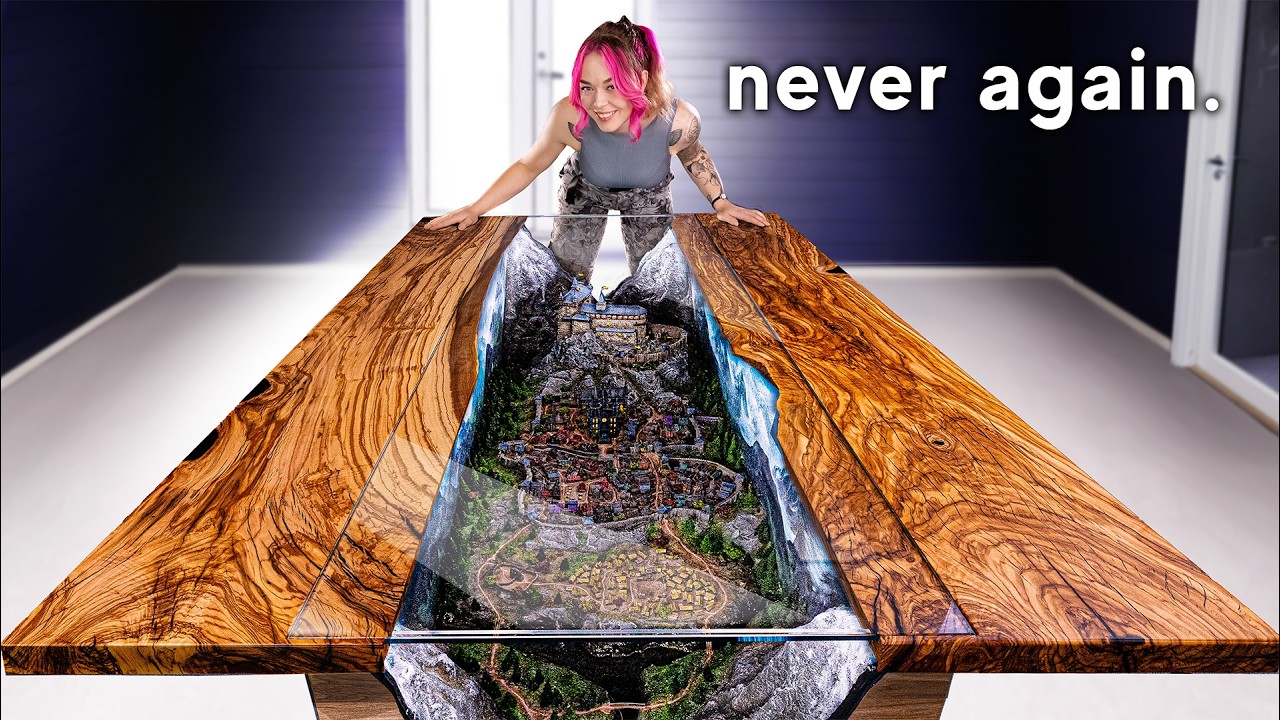
- I am constantly in awe of the work Martina and Hansi do on the Nerdforge YouTube channel, and this week's episode featured an incredible build for The Blood of Dawnwalker devs. Check it out below!
That's it for this week, I'll be back on Monday with Peek at the Week. Don't forget to enter the Silver Pines giveaway in Discord and have a great weekend!